
We Found the 10 Best Ankle Support Shoes, After Wear-Testing 135+ Pairs
Ankle support shoes are essential for comfort and confidence if you have weak or injured ankles or experience ankle pain. As an exercise physiologist

Taking body measurements is an optimal way to track weight loss progress because you get an idea of what's really happening with your body. Knowing how to take body measurements is a valuable tool if you're trying to change your body composition by losing fat and/or adding muscle.
When it comes to exercise and weight loss, there are plenty of ways to monitor your progress. Of course, there's the scale, which is probably the easiest and most accessible, but there's a big problem with the scale it will regularly lie to you about how you're doing.
The scale measures everything—every sip of water, every bite of food, your bones, muscles, organs, fat. There's no way to distinguish between what you're gaining (which could just be water) or losing (which, again, could be water). If you want to get a more accurate picture of how far you've come, you'll want to learn how to take body measurements—the right way.
For the most consistent results, there are some things to ensure you are doing when taking body measurements. You should either wear fitted clothing or no clothing at all so that the garments do not factor into the measurements. When taking body measurements yourself, stand tall with your feet together, and stay relaxed without tensing, flexing, or sucking in your stomach.
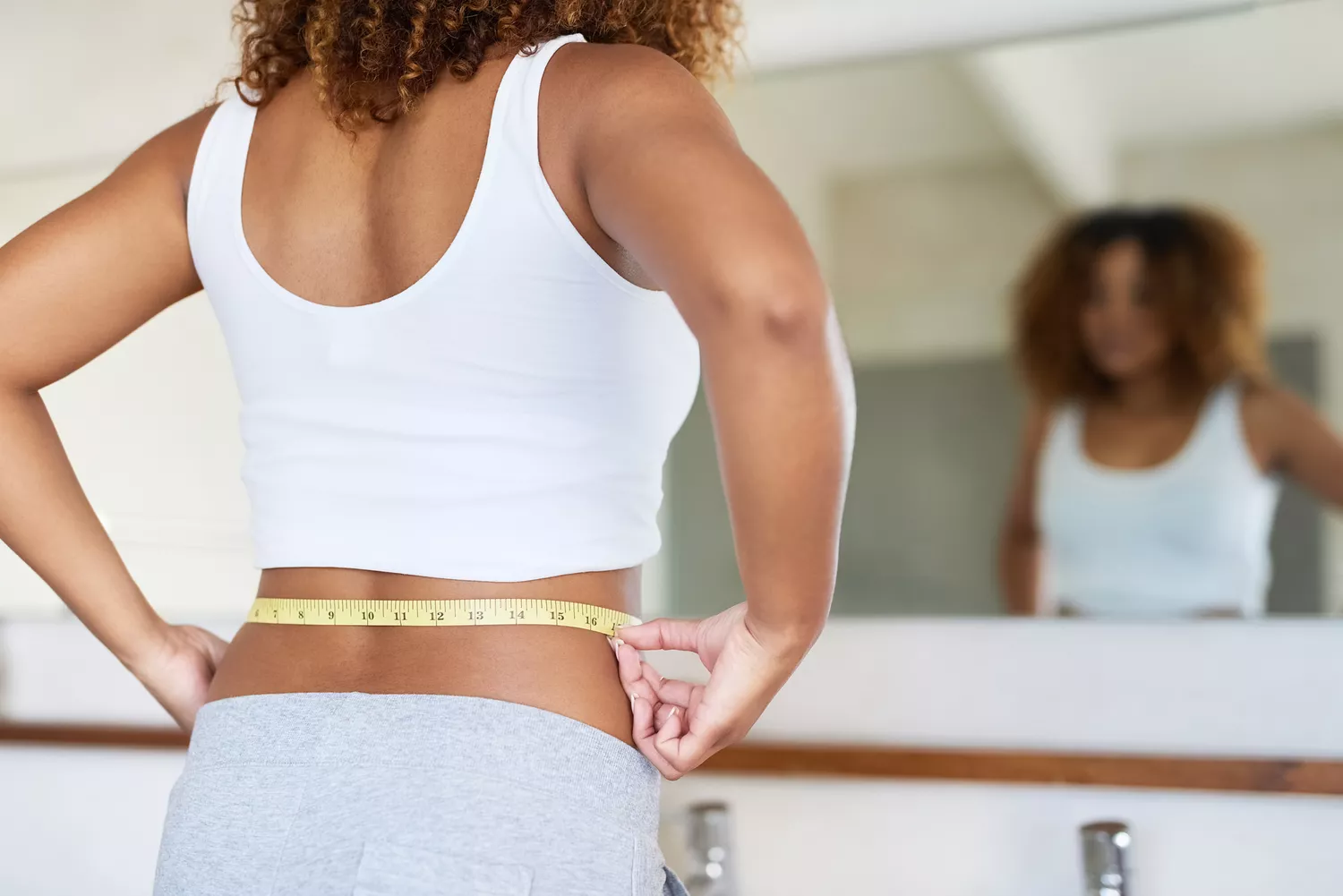
Be sure to use a flexible, inelastic tape measure. A cloth measuring tape is a good option, or you could use one specifically made for taking body measurements, such as the MyoTape Body Tape Measure.
For accuracy, take your measurements at least twice. Take the average of both measurements to get your final numbers.
For all measurements, pull the tape measure so that it sits on the surface of the skin, but doesn't compress the skin. You can record your measurements in this progress chart every four weeks to see if you're losing fat. Some people may lose inches without losing weight. That may be a sign you're losing fat and gaining muscle.
Every time you retake your measurements, take them at the same time and under the same circumstances, so you can trust the results. For example, some people prefer to take measurements first thing in the morning before eating or drinking anything.
Here's where to measure different body parts:
Everyone's body composition—how much fat, muscle, and other tissues you have—is different and will change over time based on your lifestyle and activities, as well as the aging process.
For this reason, it is important to understand what influences these changes in measurements. Here is what you need to know.
Your body loses fat all over, but the areas that hold excess fat take longer. The bottom line is, you can't control where the fat comes off, but you can look at your own body type and that of your parents and get a decent idea of where you tend to store more fat and where you don't.
To some extent, we're all influenced by our genes, but that doesn't mean you can't make changes to your body. To do that, make sure you have a complete exercise program that includes a combination of cardio exercise, strength training for all your muscle groups, and a nutritious eating plan that allows you to effectively fuel your body.
Another odd phenomenon of weight management is that it's entirely possible to lose inches from your body without actually losing weight on the scale. When you gain muscle, you may be losing inches even though you're not losing weight, and that's perfectly normal—especially if you've added strength training to your routine or you're doing a new activity that triggers your body to build more lean muscle tissue.
Keep in mind that while muscle weighs more than fat, it takes up less space. If your goal is to build muscle, this is a great sign that you are achieving your goal.That's why taking your measurements can tell you more than the scale and also why it's body composition, not your weight, that really tells the true story.
It's wise to take measurements every 2 to 4 weeks to see how your efforts are affecting your body composition while you are actively trying to build muscle, manage your weight, or both. If you are trying to maintain your results, taking measurements every month or two should suffice.
Spot reduction, or doing an exercise for a certain body part in the hopes of getting rid of fat there, typically doesn't work for most areas of the body. Taking your measurements will reassure you that your body composition is changing.
Many of us may wonder whether our measurements are normal for our weight and height. The short answer to this is yes, whatever your measurements are, they are normal for you. Look around, and you'll find that everyone has a different body shape and size. It can help to know the general body types, which describe where we store extra fat.
One way to understand differences among people is to look at different body types. While these body types are not a scientific description of people's bodies, but they are a way to describe common characteristics. Most people fall into more than one category. But your body type can change with your lifestyle.
What's more, knowing your body type or shape tells you where your body stores excess fat. Understanding your body can lower your frustration and let you know you're on the right track.
Taking your measurements is an effective way to track your exercise, nutrition, and weight management progress. Not only does it allow you to get an idea of what's really happening with your body, but also can be reassuring as you see the results of your effort. It also may help to talk to a healthcare provider about your goals. They can provide advice and suggestions to keep you on the right track.

Ankle support shoes are essential for comfort and confidence if you have weak or injured ankles or experience ankle pain. As an exercise physiologist

Whether standing all day at work, hiking steep trails, or walking the dog, foot pain shouldn't slow you down. Insoles are designed to deliver comfort

The five factors of fitness contribute to physical health and help guide the process of getting fit. You already know that benefits come when you prio

Well known for its comfortable and stylish activewear, lululemon has created a loyal community of fans for its functional, fashionable products—from s

While a multivitamin is not essential for everyone, it can be helpful when you aren't able to get the nutrients you need from your diet alone. This mi

Greek yogurt is a versatile, protein-rich dairy product that's easy to eat at any time of day. You can enjoy it with fresh fruit at breakfast, as a sm
We are an information hub dedicated to delivering clear, trustworthy, and engaging content across a wide spectrum of topics — from innovation and trends to daily life, wellness, and global developments.
Our team is passionate about creating content that helps people stay curious, make informed decisions, and understand the world with greater clarity and context.
With a focus on quality, relevance, and accessibility, we aim to offer a meaningful experience for everyone seeking knowledge, ideas, and thoughtful perspectives.