
We Found the 11 Most Comfortable Walking Shoes After Stepping in 100+ Pairs
What makes a shoe truly comfortable? Think well-cushioned, supportive sneakers that can handle long days of walking, running, or standing. The most co

Also Known As: Two-arm bent-over dumbbell row, bent-over two-dumbbell row
Targets: Upper, middle, and lower back
Equipment Needed: Set of dumbbells
Level: Intermediate
The bent-over dumbbell row is one of the best muscle-building exercises for your back. Select challenging weights you can lift without sacrificing form when incorporating this exercise into your strength-training workout.
Verywell / Ben Goldstein
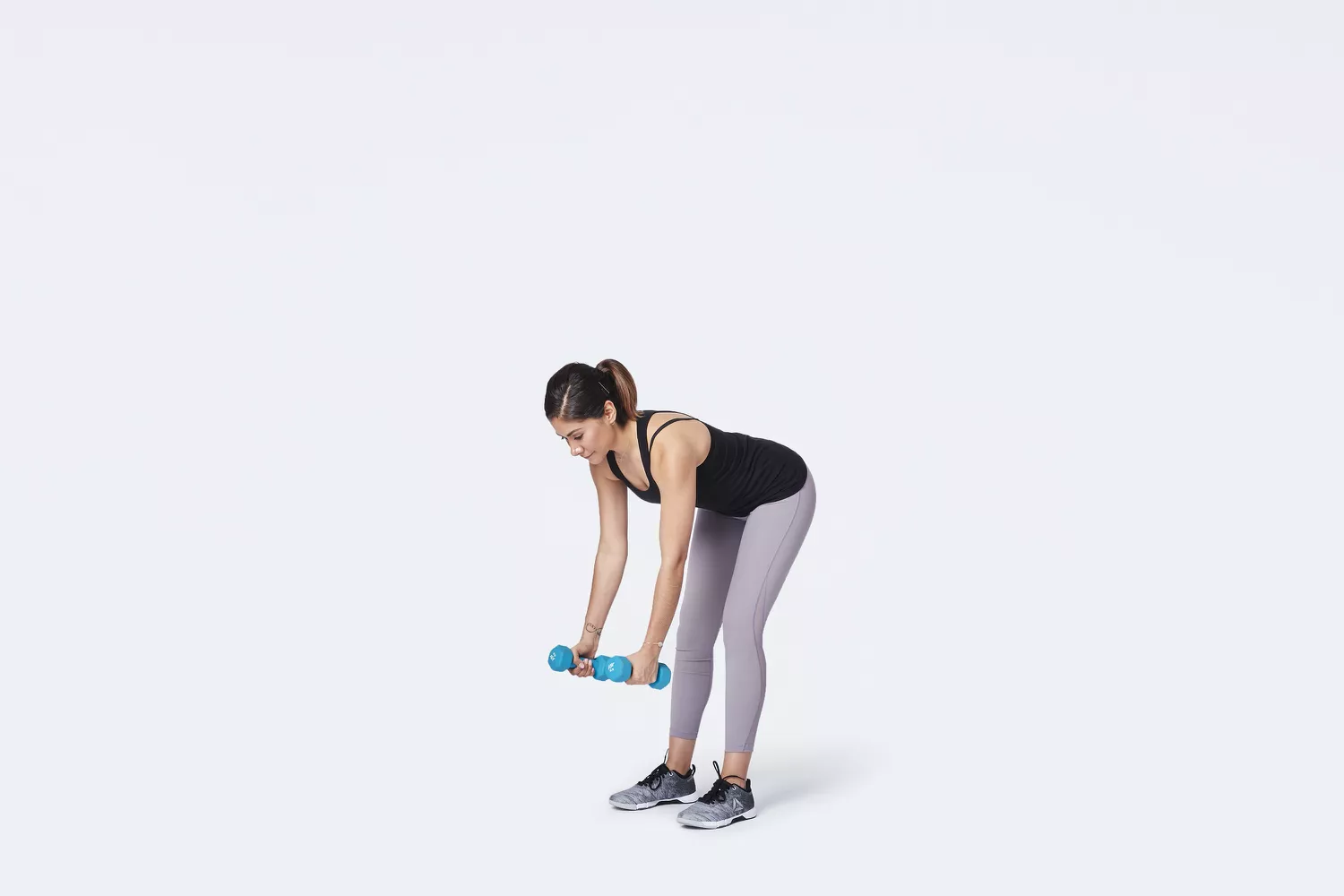
Stand with your legs shoulder-width apart, and knees slightly bent. Hold a dumbbell in each hand, shoulder-width, with your palms facing each other. Bend over at a 45-degree angle (no lower) and take a deep breath in.
Throughout the exercise, keep your spine neutral or slightly arched, pointing your tailbone toward the upper wall behind you. Keep your abdominals engaged and legs stationary (without locking your knees).
The two-arm bent-over dumbbell row targets upper, middle, and lower back muscles, including the trapezius, infraspinatus, rhomboids, latissimus dorsi, teres major, and teres minor. The pectoralis major (chest) and brachialis (upper arm) also get worked along with the shoulder rotators.
One of the benefits of bent-over rows is that they can improve the stability of your spine. Using dumbbells makes this a moderate-intensity exercise, enabling you to burn more calories when you add this movement to your workout routine.
The bent-over dumbbell row is a compound functional exercise that uses this same motion throughout your day, such as when picking up heavier objects. Knowing how to position your back and engage your core can protect you from strain.
You can vary this exercise to better fit your fitness level and goals.
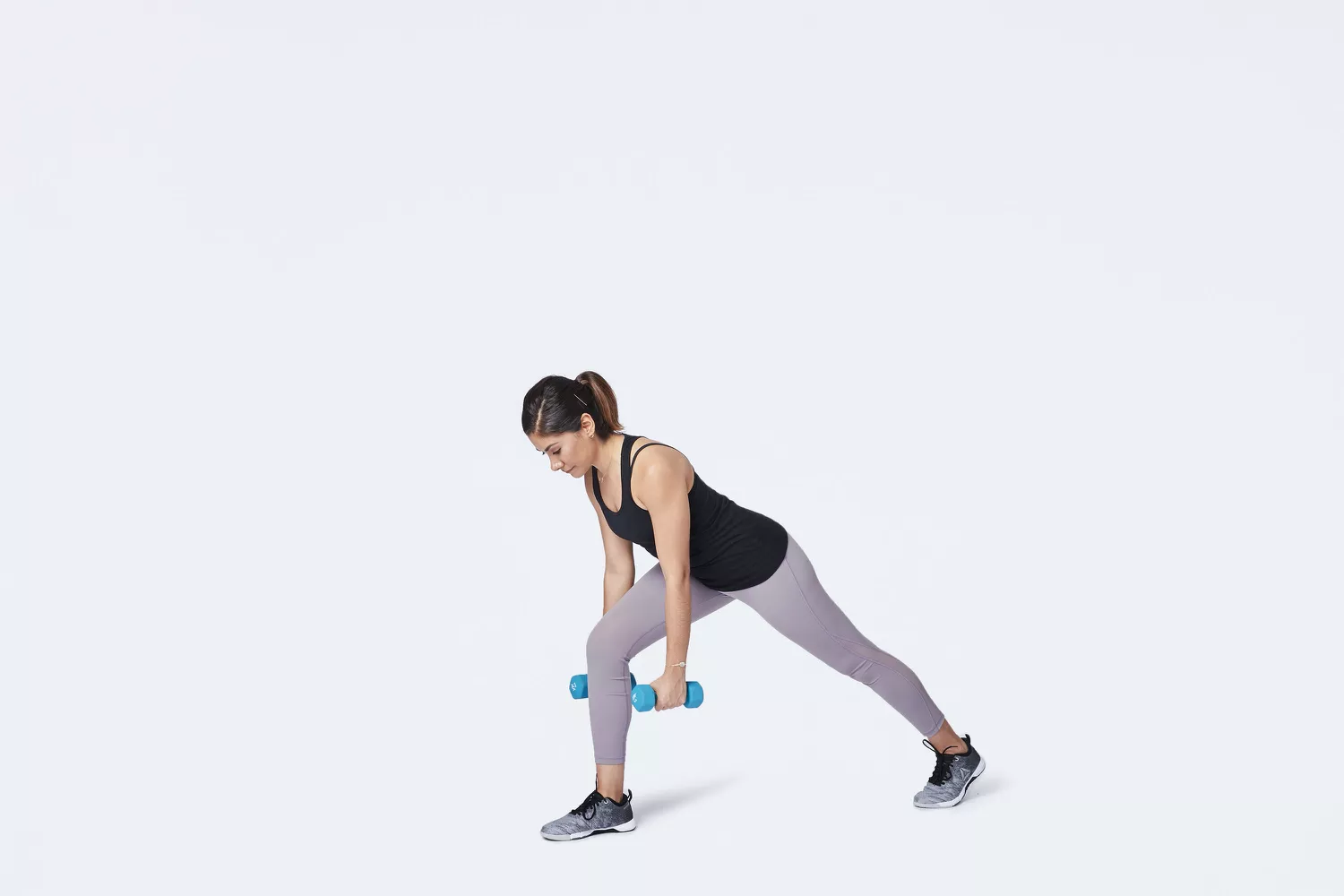
Do this exercise in a lunge position, and you can work your hamstrings and glutes along with your back. Plus, some people find it easier to balance in this position. To try, stand with one leg back and the other forward while doing your bent-over dumbbell rows.
Verywell / Ben Goldstein
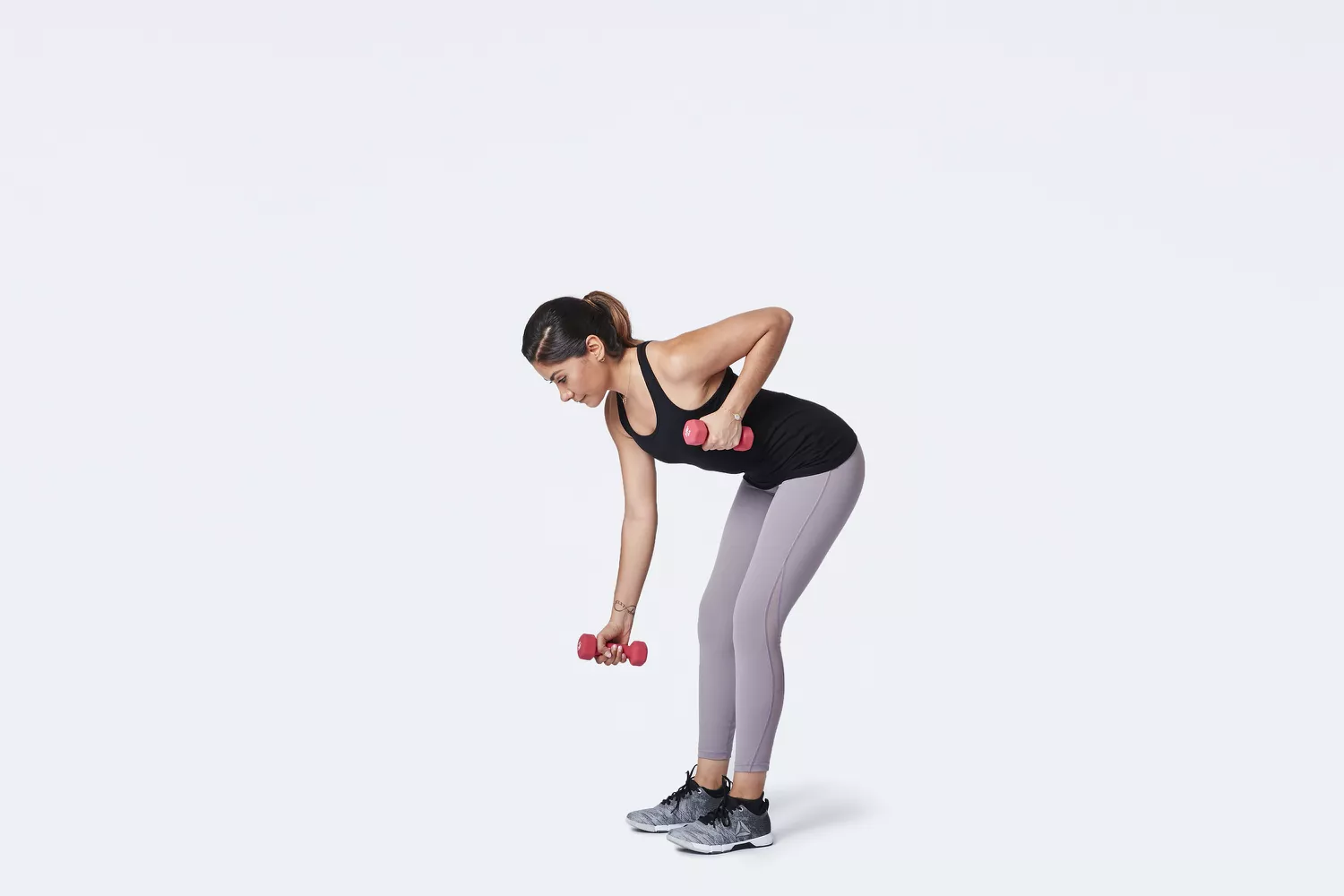
Instead of lifting both weights simultaneously, lift them one at a time. Unilateral movements (those that only use one side of the body at a time) are better for increasing power output than bilateral movements (those that use both sides of the body simultaneously).
You can do single-arm rows by switching back and forth between the right and left arm continuously (right-left-right-left) or by doing all of your reps on the right side, followed by all of the reps on the left.
Verywell / Ben Goldstein
You can also do the bent-over row with a barbell. If you choose this variation, hold the barbell with the palms facing in, bend 45 degrees at the hips, then brace the abs and lift the weight.
Avoid these errors to get the most from bent-over dumbbell rows and prevent strain or injury.
Keep your back straight (not curved) and shoulders square throughout the exercise. If you find your back rounding, it is a sign that you may be trying to lift too much weight. Choose dumbbells light enough to enable the proper form.
Your body should be bent forward no more than 45 degrees. Bending over more than this can strain your back, especially if you lift heavier weights. It can help to slightly hyperextend your lower back, pointing your tailbone up and back to prevent rounding the spine.
Try not to bend your wrists up, down, or to the side. Instead, aim to keep this joint as stationary as possible during the exercise. Moving your wrists could lead to strain.
Your legs and hips are still throughout this exercise (after you set your stance and pick up the weights). Do not squat or otherwise move the lower body. Using your lower body to help you lift the weight takes the emphasis off of the muscles you are trying to work, making the exercise less effective.
Don't lift heavy weights with this particular exercise unless you are experienced and have built strength in your back and shoulders. If you want to use heavier weights, switch to a barbell, or try the bent-over dumbbell row while supported by a bench, or as a unilateral exercise with leg and arm support.
Avoid this exercise if you have lower back pain. Also, be careful if you use heavier weights as this can lead to shoulder impingement (as can poor form).
If pain occurs in the shoulder or back when doing bent-over dumbbell rows, cease the exercise and consult with your doctor or physical therapist. You can increase the amount of weight you lift once you are able to maintain control and perfect form.
Incorporate this move and similar ones into one of these popular workouts:

What makes a shoe truly comfortable? Think well-cushioned, supportive sneakers that can handle long days of walking, running, or standing. The most co

Heading to the beach for a sandy stroll can quickly become a hassle without the right footwear—think waterlogged sneakers that fall apart or itchy deb

Walking and hiking. Depending on your personal goals and interests, the words could practically be interchangeable. After all, taking a walk on a well

Wearing a rash guard while you enjoy the outdoors can help keep you safe from the sun’s harmful ultraviolet (UV) rays. The best rash guards are comfor

Known for its tangy taste and potential health benefits, apple cider vinegar has become increasingly popular in cooking and as a supplement. While the
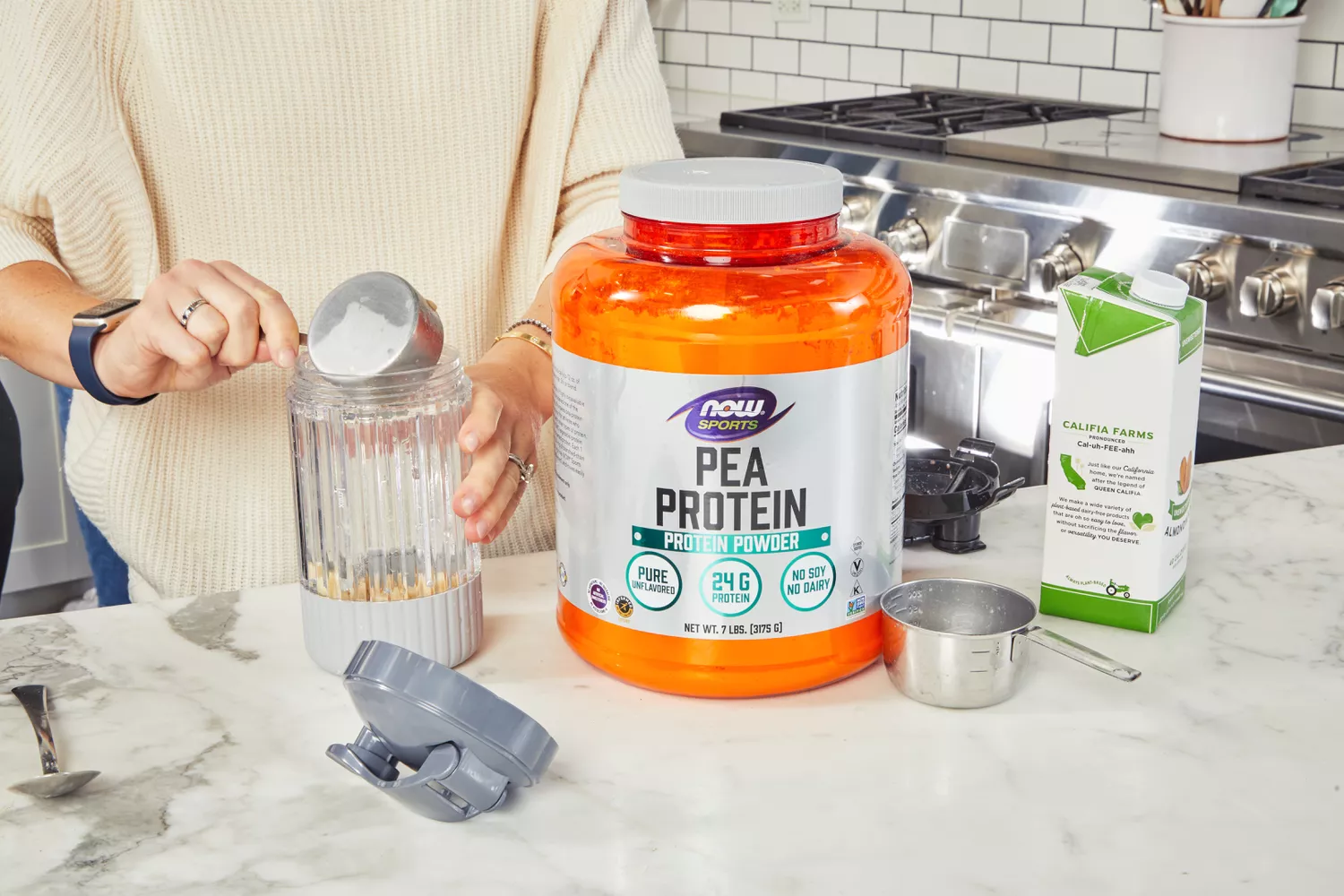
Protein needs for women vary based on a variety of factors, including age, body composition, activity, and overall health. While you can get all the p
We are an information hub dedicated to delivering clear, trustworthy, and engaging content across a wide spectrum of topics — from innovation and trends to daily life, wellness, and global developments.
Our team is passionate about creating content that helps people stay curious, make informed decisions, and understand the world with greater clarity and context.
With a focus on quality, relevance, and accessibility, we aim to offer a meaningful experience for everyone seeking knowledge, ideas, and thoughtful perspectives.